What Is Ashtanga Yoga? A Beginner's Map of the Practice
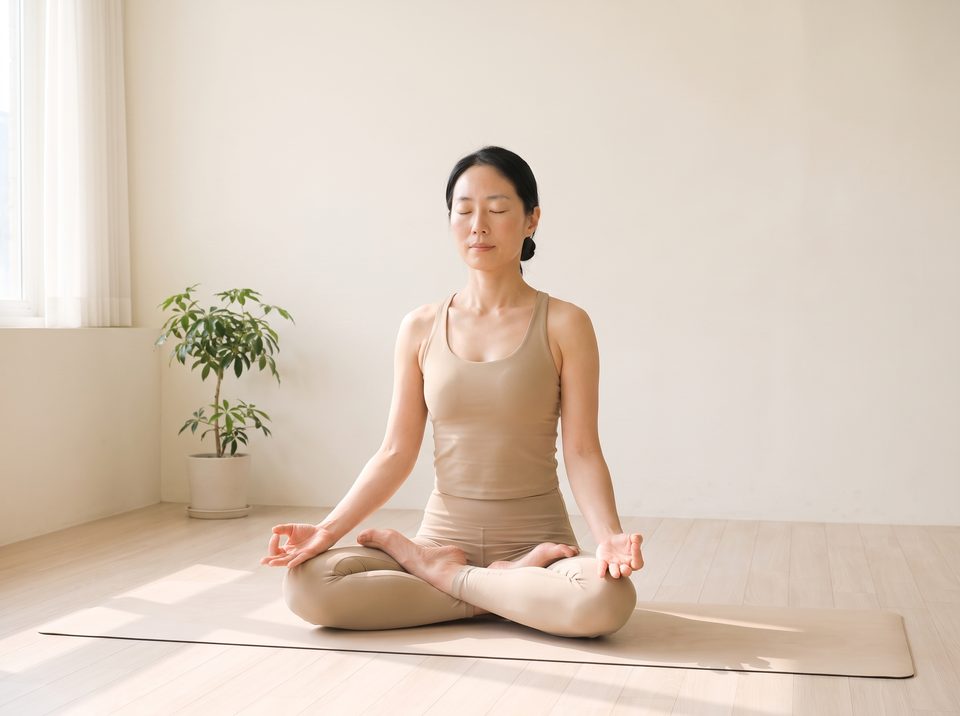
Ashtanga: the same postures, the same order, carried on the breath
If you have ever watched someone move through a yoga practice that looked less like a class and more like a moving meditation — the same postures, the same order, breath after steady breath — there is a good chance you were watching Ashtanga. I have been standing on a mat in this tradition for many years now, most of those mornings before sunrise, and I still begin every morning with the same first breath I took as a beginner. This post is the first in a daily series that will teach you, one small piece at a time, how to practice the Ashtanga Primary Series at home, even if you have never stepped on a mat before. Today we are not doing any poses at all. We are drawing the map, so that everything that follows makes sense.
What is Ashtanga yoga?
Ashtanga is a style of hatha yoga in which you practice a fixed sequence of postures, always in the same order, linked together by breath and movement. Nothing about the sequence changes from day to day. Your teacher does not invent a new flow each morning; there is no playlist, no theme of the week. The sequence is the sequence — and that is precisely the point.
Because the order never changes, the practice slowly becomes something you know by heart, the way you know a familiar walk home. Your mind stops asking "what comes next?" and settles into the breath. In my first year I found the repetition maddening — I wanted variety, progress, something new to conquer. Somewhere in the second year the arguing stopped, and what was left was simply breathing and moving. That was the moment yoga stopped being exercise for me and became practice. You will feel a version of it yourself within a few weeks of consistent repetition.
The name comes from Sanskrit: ashta (eight) and anga (limb) — "eight limbs." It refers to the eight-limbed path of yoga described by the sage Patanjali in the Yoga Sutras, an ancient text on the practice and philosophy of yoga. The eight limbs include ethical principles, breath work, posture, and meditation. The physical practice we will learn together — the postures — is just one limb, called asana. Ashtanga's founding idea is that for most of us, the body is the most honest doorway: practice the postures with attention and steady breath, and the other limbs begin to develop on their own. Years into this practice, I can tell you this is not a slogan. It is simply what happens, slowly, whether you plan it or not.
Where does it come from? Mysore and Pattabhi Jois
The Ashtanga method as we know it was systematized in the city of Mysore, in southern India, by K. Pattabhi Jois (1915–2009), who taught there for most of the twentieth century. Jois was a student of T. Krishnamacharya, a teacher often called the father of modern yoga. From the 1970s onward, students from around the world traveled to Mysore to learn from Jois and carried the method home with them. That is why, to this day, self-paced Ashtanga classes everywhere are called "Mysore style" — a format we will talk about properly later in this series.
You do not need to memorize any of this history to practice. But it helps to know that the sequence you will be learning is a shared, stable tradition — which is exactly what makes it learnable from home. The Primary Series you practice in your living room is the same series practiced in Mysore, Tokyo, and Berlin this morning. I have practiced it in shalas where I did not speak a word of the local language, and it never mattered: the count, the breath, and the postures were a language we all already shared.
The six series — and why you only need one
Ashtanga contains six sequences of increasing difficulty: the Primary Series, the Intermediate (Second) Series, and four Advanced Series that only a small number of practitioners in the world ever complete. If you find that intimidating, here is the honest truth from someone who has spent long years with the later series: the Primary Series alone is a complete, lifelong practice. I still practice Primary every week, and it still teaches me. The later series are not levels to race toward; they are simply further down a road that has no finish line.
This blog will teach the Primary Series only, and we will move slowly — foundations first, then one posture at a time.
Yoga Chikitsa: what the Primary Series is for
The traditional name of the Primary Series is Yoga Chikitsa, usually translated as "yoga therapy." The name describes its intent rather than a medical promise: this is the sequence meant to bring the body back to baseline — to stretch what has shortened, strengthen what has weakened, and teach the hips, hamstrings, and spine to move well again. It is built mostly from forward folds, gentle twists, and hip work, stitched together with flowing transitions called vinyasas.
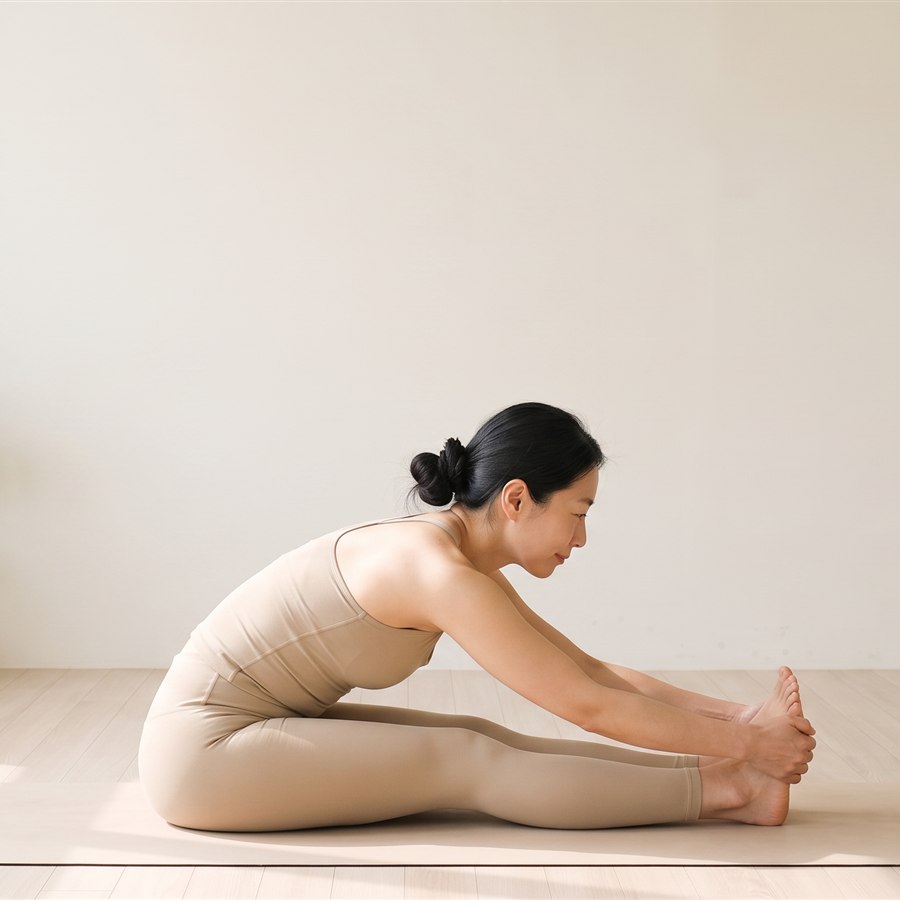
Paschimottanasana, the seated forward fold — the quiet heart of Yoga Chikitsa
A full Primary Series practice has a clear architecture, and it will help you to see the skeleton now:
- Sun salutations (Surya Namaskara A and B) — the warm-up that teaches breath-linked movement. This is the very first thing you will physically learn, and honestly, it may be all you practice for your first couple of weeks. That is not a shortcut — it is the traditional way to begin, and it is how I began.
- The standing sequence — folds, triangles, and balances that build legs and stability.
- The seated sequence — the long heart of Primary: forward folds, twists, and hip openers on the floor.
- Backbends and the finishing sequence — a short arc of backbending, inversions (with safe alternatives for home practitioners), and quieting postures.
- Rest — every practice, even a ten-minute one, ends lying down in stillness.
Notice something reassuring in that structure: you always practice from the beginning. A beginner's practice is simply the first part of the same sequence — sun salutations, a few standing poses, then rest. As you learn more postures through this series of posts, your practice grows longer from the same starting point. You are never doing a "beginner's version" of Ashtanga; you are doing Ashtanga, just the early chapters of it.
What makes Ashtanga different — and where every practice begins
Three things, mainly. First, the fixed sequence, which we have covered. Second, the breath: every movement in Ashtanga is assigned to an inhale or an exhale — broadly, you inhale when the body lifts or opens, and exhale when it folds or twists — and the whole practice is carried on a steady, audible breathing technique called ujjayi, a soft ocean-like sound made in the back of the throat. You breathe only through the nose, the inhale and exhale equal in length, and in most postures you stay for five of these slow breaths. Tomorrow's entire post is devoted to this breath, because it truly is the engine of everything else. Third, the gaze: each posture has a prescribed gazing point, called a drishti, which keeps the eyes — and with them the mind — from wandering around the room.
Breath, posture, gaze. Ashtanga teachers call these three together tristhana, the three places of attention. When all three are engaged at once, there is very little bandwidth left over for your to-do list — which is exactly how a physical practice becomes a moving meditation.
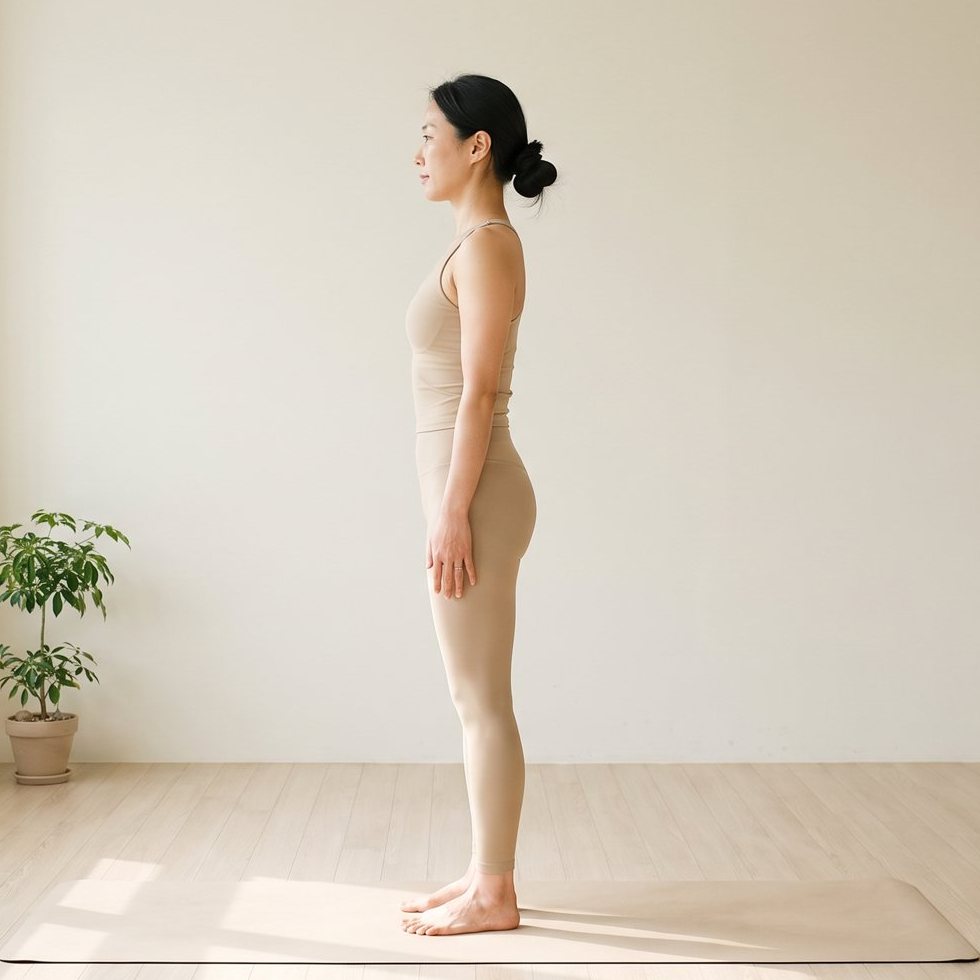
Samasthiti — simply standing, and the hardest posture to do with full attention
And where does the whole thing begin? Standing still. The first position of the practice is samasthiti — "equal standing" — feet together, spine tall, breath already audible. After all these years I will tell you something that surprises every beginner I say it to: this is the hardest posture in the practice. Not because it demands strength or flexibility, but because it demands nothing except complete attention, and the mind hates that. Students sail through it in three seconds on the way to the interesting poses. When one of them finally stands in it — really stands in it, breathing, present — I can see it from across the room. Everything that follows in this series is, in a sense, an elaboration of that one honest standing breath.
Do I need to be flexible, fit, or young?
No, no, and no. You need a mat, a bit of floor, and the willingness to breathe and repeat. Stiff hamstrings are not a barrier to this practice; they are the raw material of it. I came to the mat with hamstrings like fence posts, and I have taught students in their sixties who started from nothing and built a daily practice they kept for the rest of their lives. Throughout this series, every posture post will include honest modifications — bent knees, straps, shorter holds — because the practice is meant to fit your body today, not the body in the photographs. If you have an injury or a health condition, read the cautions in every post and let them actually guide you.
Watch out
Even before your first posture, a few words of protection, because the most common Ashtanga injuries happen in the first enthusiastic months, not the first years. The vulnerable places in the Primary Series are the hamstrings (from forcing forward folds), the knees (from forcing crossed-leg positions before the hips are open), and the lower back (from folding with a rounded spine). I speak from experience: early in my practice I pulled a hamstring high up near the sitting bone by yanking myself deeper into a fold, and it took the better part of a year to heal — a year of practicing patience I could have spent practicing yoga. The signals to respect are simple. A broad, warm stretching sensation in the belly of a muscle is fine; a sharp, thin, localized pain — especially near a joint, the sitting bones, or the inner knee — means back away immediately. If your breath turns short and ragged, you have already gone too far. Beginners should keep the knees bent generously in every forward fold, sit on a folded blanket, and treat "less depth, longer breath" as the rule. And rest one day a week from the start — the tradition builds rest in for good reason.
How to use this blog
One post per day, in order. The first eight posts lay foundations — breath, inner locks, gaze, the counting system, and how to set up a home practice — and then we begin the postures themselves with Surya Namaskara A. Later posts will assume you have read the earlier ones, so if you are arriving in the middle, start here and read forward. There is no need to rush: the sequence has been taught this way for the better part of a century, and it will wait for you. It has waited patiently for me and it is still teaching.
Tomorrow we begin with the single most important skill in all of Ashtanga — before any posture, before even the sun salutations: Ujjayi Breath: The Engine of Ashtanga. Learn that one thing well, and every pose that follows becomes easier. When you are ready to explore the postures themselves, the full Primary Series is laid out pose by pose at ashtanga-shala.net. See you on the mat.
This post is general guidance, not medical advice. If you have an injury or health condition, check with a professional before practicing.
Stand still once today, feet together, and take one slow breath you actually listen to — the practice has already begun.


