Ujjayi Breath: The Engine of Ashtanga
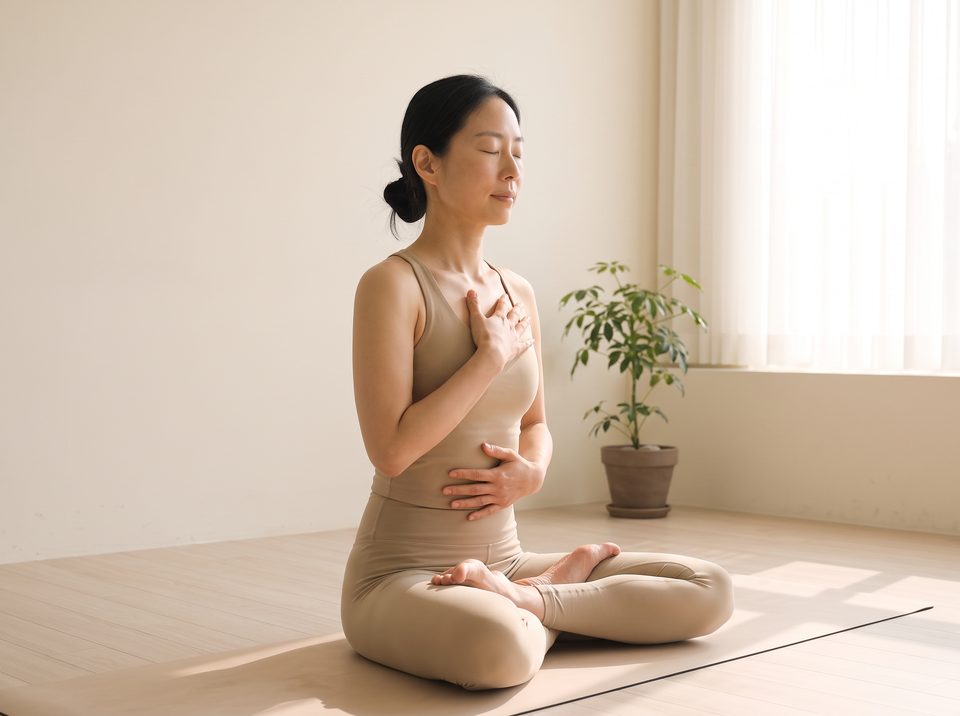
The breath you can hear is the breath you can watch
If you read yesterday's introduction to Ashtanga yoga, you already know that this practice is built on a handful of techniques that matter more than any single pose. Today we start with the most important one of all: the breath. Before you learn a single posture, learn this — because in Ashtanga, the breath is not an accessory to the movement. It is the engine that drives it. I have practiced this breath every morning for many years, and I still consider it the deepest technique I know. Everything else in this series is, honestly, decoration around it.
What is Ujjayi breath?
Ujjayi (pronounced oo-JAI-ee) is usually translated as "victorious breath." In practice, it means breathing in and out through the nose while gently narrowing the back of the throat, so that the air makes a soft, steady, ocean-like sound as it passes. Some teachers compare it to the sound of waves; others to the sound you hear when you hold a seashell to your ear. Either way, the point is the same: the breath becomes something you can hear.
Let me tell you what that sounds like at scale. Step into a full Mysore-style room at six in the morning — forty, eighty, sometimes more than a hundred people, each moving through the sequence at their own pace — and the room is nearly silent except for one thing: a low, oceanic hush, rising and falling, as if the building itself were breathing. The first time I stood in a room like that as a young practitioner, I understood before anyone explained it: this breath is the practice. The postures are just the shapes it moves through.
Why does a breath you can hear matter? Because a breath you can hear is a breath you can watch. The sound gives your mind something to hold on to, breath after breath, for the entire practice. And it is an honest early-warning system. When the sound is smooth and even, you are practicing well. When it turns ragged, short, or silent, your body is telling you that you have pushed too far — and that feedback arrives long before pain does. After enough years of teaching, I stopped needing to watch students to know how they were doing; I could hear a practice going wrong from across the room, in the breath, a full posture before anything visibly went wrong. Yours will tell you the same things, if you keep it audible.
How to find the sound: step by step
- Sit comfortably — cross-legged on the floor or upright in a chair. Let your spine be tall and your shoulders soft.
- Open your mouth and exhale as if you were fogging up a mirror or a pair of glasses. Notice the "haaah" feeling at the back of your throat.
- Do it again, but this time close your mouth halfway through the exhale. Keep that same "fogging" feeling in the throat while the air now exits through your nose. That soft hissing sound is Ujjayi.
- Now try it on the inhale too: keep the same gentle narrowing in the throat as you breathe in through the nose. The sound on the inhale is usually quieter — that is normal.
- Settle into a rhythm: inhale and exhale of equal length, both audible, both through the nose. Start with a count of about four seconds in and four seconds out.
That is the whole technique. It takes two minutes to learn and years to refine — which is exactly the kind of practice Ashtanga loves. I am still refining mine.
Why the breath leads the movement
In the vinyasa system we looked at yesterday, every movement is assigned to either an inhale or an exhale. The rule is simple and you can feel its logic in your own body: you inhale as you lift, open, or lengthen — arms rising overhead, chest lifting, coming up to stand — and you exhale as you fold, twist, or ground — folding forward, moving down, settling deeper. The breath starts a fraction of a moment before the movement, and the movement rides on it — like a surfer catching a wave rather than swimming against it. Once you are in a posture, you stay for five slow Ujjayi breaths, and those five breaths — not the shape of the pose — are the actual work.
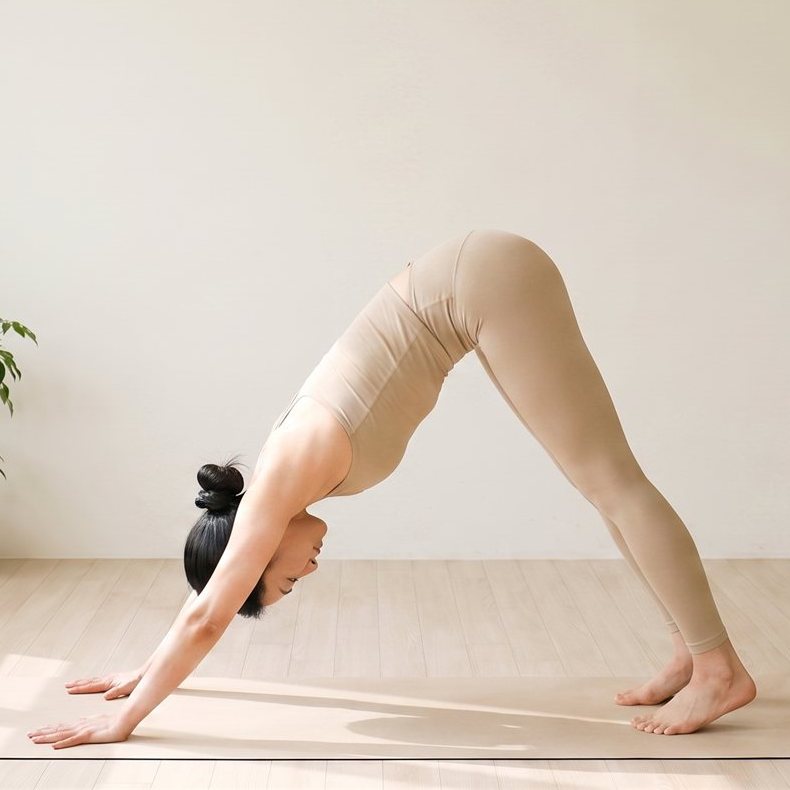
Downward-Facing Dog — the classic place to stay for five audible breaths and just listen
This is why Ashtanga practitioners talk about the breath as a metronome. It sets the pace of the entire practice. On days when you are tired, the breath slows and the practice softens. On days when you are strong, the breath stays long and steady and carries you through. You never have to decide how fast to practice — you just have to listen. In all my years of practice I have never once planned the length of a practice; the breath has always decided.
The breath does one more quiet job: it warms you. The slight narrowing of the throat means each breath does a little work, and over a full practice that work builds gentle internal heat. This is one reason Ashtanga does not need a heated room — the heat comes from inside, softening muscles gradually and safely as the practice unfolds, rather than all at once from a radiator.
Common mistakes
Making it too loud. Beginners often force the sound until it becomes a rasp. Ujjayi should be audible to you on your own mat, not to someone across the room. A good check I give students: it should sound like the sea in a shell, not like static on a radio. If your throat feels sore or scratchy afterward, you are squeezing too hard — soften it by half.
Breathing through the mouth. The mouth stays gently closed for the entire practice, on both the inhale and the exhale. If you find yourself mouth-breathing, it is usually a sign the practice has become too strenuous — slow down and recover the nasal breath first.
Holding the breath in hard moments. The instinct in a difficult position is to freeze the breath. I spent my own first years doing exactly this in every posture I feared, and it made every one of them harder. Notice it and do the opposite: keep the breath moving, even if it gets shorter. A moving breath keeps the body calm; a held breath tells it to panic.
Letting the inhale and exhale drift apart. Over time the exhale tends to shorten. Check in now and then: are the two halves of the breath still roughly equal? Equal breath, equal mind.
A simple daily exercise
You do not need a single yoga pose to start practicing Ujjayi today. Sit down, set a timer for five minutes, and simply breathe with the sound — four seconds in, four seconds out, nose only, mouth softly closed. If your mind wanders, come back to the sound; the sound is the anchor. Do this daily for a week and you will walk into your first Surya Namaskara with the most important skill in Ashtanga already in your body. I still begin difficult days exactly this way, before any posture: five minutes of nothing but the sound.
Watch out
Ujjayi is one of the gentlest techniques in yoga, but gentle does not mean signal-free, so know when to back off. Dizziness or lightheadedness means you are working the breath too hard or breathing too deeply too soon — stop, breathe normally, and let it pass before returning; it always passes within a minute or two. A sore or tight throat means the narrowing has become a clench — the effort in the throat should stay around a whisper, never a grip. Tension creeping into the face, jaw, or shoulders is the same error migrating upward; soften those the moment you notice. If you have asthma or another respiratory condition, my experience with such students is that Ujjayi can be genuinely soothing, but only when kept short and soft — keep the count comfortable (even three seconds is fine), never strain for length, and stop if it triggers any tightness. And a beginner's substitute that I use freely with new students: if the throat sound frustrates you at first, simply breathe slowly through the nose with equal inhale and exhale, no sound at all. Equal, unhurried nasal breathing is ninety percent of the benefit; the sound can come next month.
Tomorrow we go one layer deeper into the engine room of the practice: the bandhas, Ashtanga's famous "inner locks," and what they actually mean for a beginner. And when you begin the postures, Practice Mode at ashtanga-shala.net paces every pose to your breath — a good place to put ujjayi to work.
This post is general guidance, not medical advice. If you have an injury or health condition, check with a professional before practicing.
Tonight, before sleep, take ten breaths you can hear — that is already practice.


