The Opening and Closing Mantras (and Whether You Need Them)
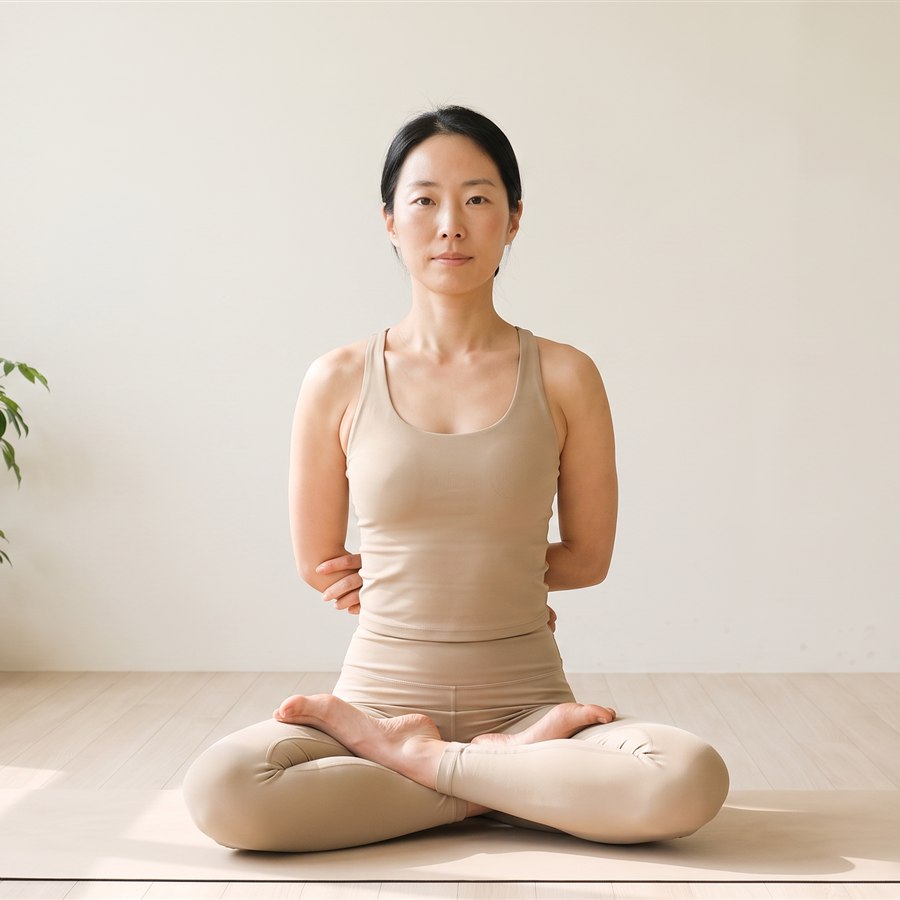
Baddha Padmasana - the seated posture the closing mantra is chanted from
Every traditional Ashtanga practice opens with a chant and closes with another. If you have only ever practiced at home, you may have watched a video, heard thirty seconds of Sanskrit you did not understand, and quietly wondered whether you were supposed to be joining in. Today we clear that up: what the mantras say, why they are there, and what to do if chanting is not for you.
What the opening mantra is
The opening mantra is chanted once, standing at the top of the mat with the palms together, before the first sun salutation. It has two parts.
The first part is an invocation to the teachers of the yoga tradition — a line of thanks addressed to those who passed the practice down, describing them as removing the "poison of conditioned existence," the ordinary fog of habit and reactivity that yoga is meant to clear. It is, in plain terms, a thank-you note to your teachers and their teachers.
The second part salutes Patanjali, the sage credited with the Yoga Sutras — the text that gives Ashtanga its eight-limbed structure. He is described in traditional imagery with a serpent's coils, holding a sword, a conch, and a wheel. The imagery is symbolic rather than literal: the sword cuts through ignorance, the conch calls attention, the wheel represents time.
Put together, the opening mantra does something quite simple. It marks a line. On one side is the rest of your day; on the other side is practice. That transition is the mantra's real work, and it is why practitioners who do not consider themselves religious often keep chanting it anyway.
What the closing mantra is
The closing mantra is chanted at the end, after the finishing sequence and before the final rest. It is a wish for the wellbeing of the world — prosperity for people, good governance, welfare for all beings, and peace repeated three times at the end.
Where the opening mantra turns your attention inward toward the practice, the closing mantra turns it outward again. Ninety minutes of intense attention on your own body can leave you quite self-absorbed, and the closing chant is a deliberate correction: you finish by wishing well to everyone else. Whatever you believe about chanting, that structure is a thoughtful piece of design.
Is it religious?
This is the question most beginners actually want answered, so let us be direct.
The mantras are in Sanskrit and come from a Hindu cultural context, and the opening mantra addresses a teacher-lineage with devotional language. Some practitioners experience them as prayer. Many others — including a large number of long-time Ashtanga practitioners — treat them as a traditional formality, in the way one might sing a national anthem or observe a moment of silence without holding any particular metaphysical belief.
Ashtanga itself is a physical practice built on breath, posture, and attention. Nothing in the method depends on the chanting. You do not become a worse practitioner by skipping it, and you do not become a believer in anything by doing it.
How to learn them (if you want to)
Sanskrit pronunciation is difficult to learn from written text, because the transliteration into English letters loses several distinctions the language makes. So the honest instruction here is: do not learn these from an article, this one included.
- Find a recording by a teacher and listen to the whole thing several times before trying to join in. Listening comes first — the shape of it needs to be in your ear.
- Learn one line at a time. The opening mantra is short but dense; taking a week per line is entirely reasonable.
- Chant quietly, or silently, while you learn. There is no requirement to be loud, and no one is listening at home.
- Do not worry about a perfect accent. Practitioners around the world chant these with the accents of thirty languages. Sincerity travels better than precision.
Practicing without chanting
If chanting is not something you want to do — because it does not fit your beliefs, because it feels performative, or simply because it makes you self-conscious — you can absolutely practice Ashtanga without it. But do keep the function.
Before you begin, stand at the top of your mat, bring your palms together, and take five slow breaths with your eyes closed. That is all the opening mantra was doing structurally: stopping the day, gathering attention, and marking the start.
At the end, sit for a moment before you lie down and take five more breaths. If you like, hold a simple wish for someone else's wellbeing. You will have received the entire architectural benefit of both mantras without saying a word.
Common misunderstandings
"I have to chant to do 'real' Ashtanga." No. Consistency, breath, and honest effort make a real practice.
"I should look up a translation and chant along immediately." Listen first. Chanting words you cannot yet hear correctly builds pronunciation habits that are hard to undo later.
"The mantras are magic and produce an effect." Treat them as what they demonstrably are: a ritual boundary that helps attention settle. That is not a small thing, and it does not require any larger claim.
When to be careful
There is nothing physically risky about chanting, but be honest with yourself about comfort. If a practice element conflicts with your beliefs, skipping it is the right call, not a compromise — a practice you resent will not last, and Ashtanga asks for years, not weeks.
That completes the frame. Tomorrow, in the last post before we step onto the mat properly, we look at how this blog is built: how the daily posts stack on each other, how to follow along safely, and how to use the series whether you are starting today or joining in the middle.
This post is general guidance, not medical advice. If you have an injury or health condition, check with a professional before practicing.


