Sun Salutation A (Surya Namaskara A): The First Sequence You Will Ever Learn
Walk into any Ashtanga room in the world at six in the morning and you will see the same thing: bodies folding and rising in quiet rhythm, breath loud as ocean waves. What they are doing is Surya Namaskara A — Sun Salutation A — and it is the first sequence every Ashtanga practitioner learns. It is also, in a real sense, the last one you ever master.
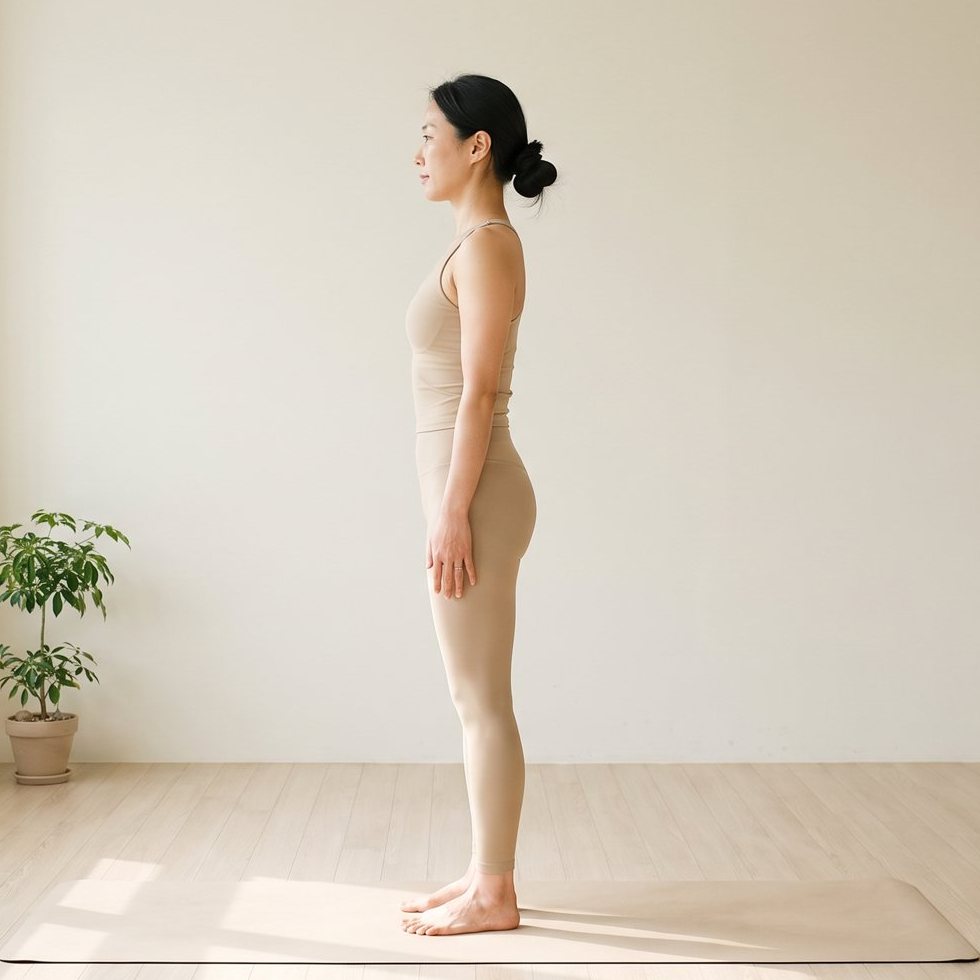
Samasthiti - where every sun salutation begins and ends.
Nine movements, nine breaths
Surya Namaskara A is a loop of nine vinyasas, each married to one breath:
- Ekam (one) — inhale, arms rise overhead, gaze to the thumbs
- Dve (two) — exhale, fold forward over the legs
- Trini (three) — inhale, lift the chest halfway, spine long
- Catvari (four) — exhale, step or jump back and lower into Chaturanga
- Panca (five) — inhale, roll over the toes into Upward Dog
- Sat (six) — exhale, press back into Downward Dog, and stay for five breaths
- Sapta (seven) — inhale, step or jump the feet between the hands, chest half-lifted
- Astau (eight) — exhale, fold deeply
- Nava (nine) — inhale, rise all the way up, arms overhead — then exhale home to Samasthiti
That is the whole thing. If you have read the earlier posts here, you will recognize every ingredient: the count is the vinyasa system, the sound is ujjayi breath, the steadiness comes from the bandhas, and each position has its own drishti. Sun Salutation A is where all four meet for the first time.
Why Ashtanga starts here
Traditionally the practice opens with five rounds of Surya Namaskara A (followed by five of the B variation). This is not a warm-up in the gym sense. Those five rounds are where you tune the instrument: the breath finds its length, the mind narrows to the count, the body heats from the inside. Pattabhi Jois liked to say that anyone who can breathe can practice — and Sun Salutation A is the proof, because it asks for nothing but breath and attention.
Three things beginners get wrong (I did too)
Rushing the breath. The movement should take exactly as long as the breath, not the other way around. If your inhale ends before your arms do, slow the arms.
Collapsing in Chaturanga. Lowering down on position four, keep the elbows over the wrists and the shoulders no lower than the elbows. Knees on the floor is not a lesser version — it is the correct version until the strength arrives.
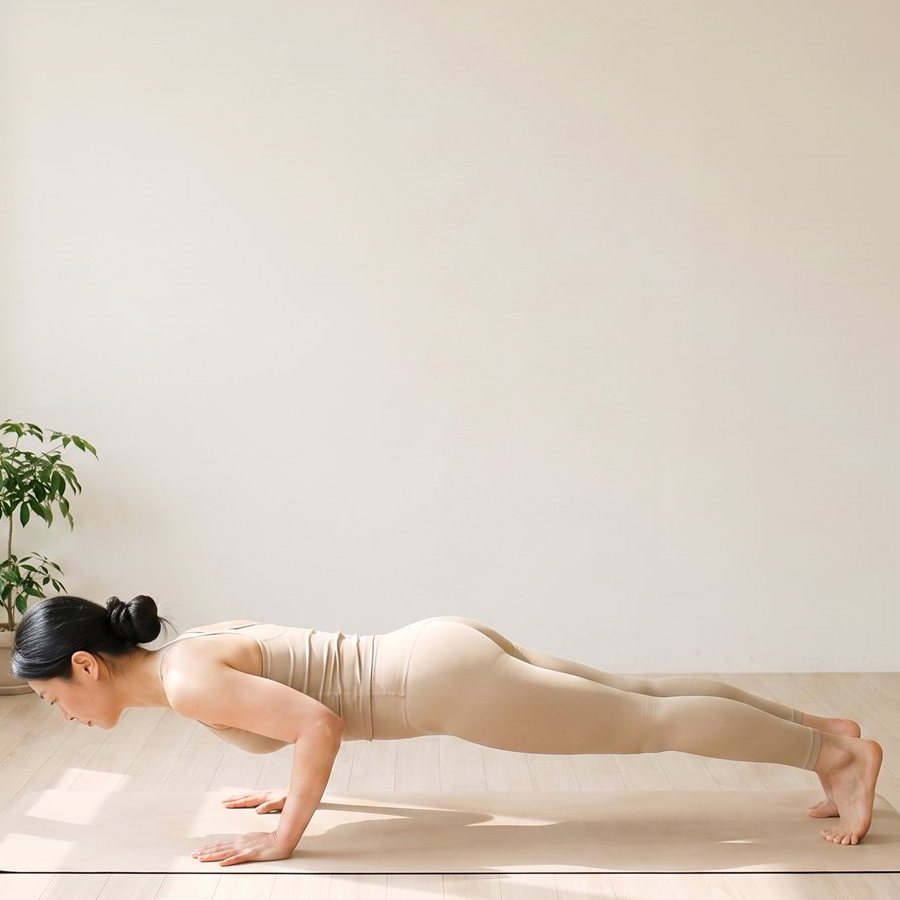
Chaturanga - elbows over the wrists, shoulders no lower than the elbows.
Skipping the stillness. Downward Dog is held for five slow breaths. Those five breaths are the heart of the sequence — the one place you stop moving and simply listen to the ujjayi sound you learned to make.
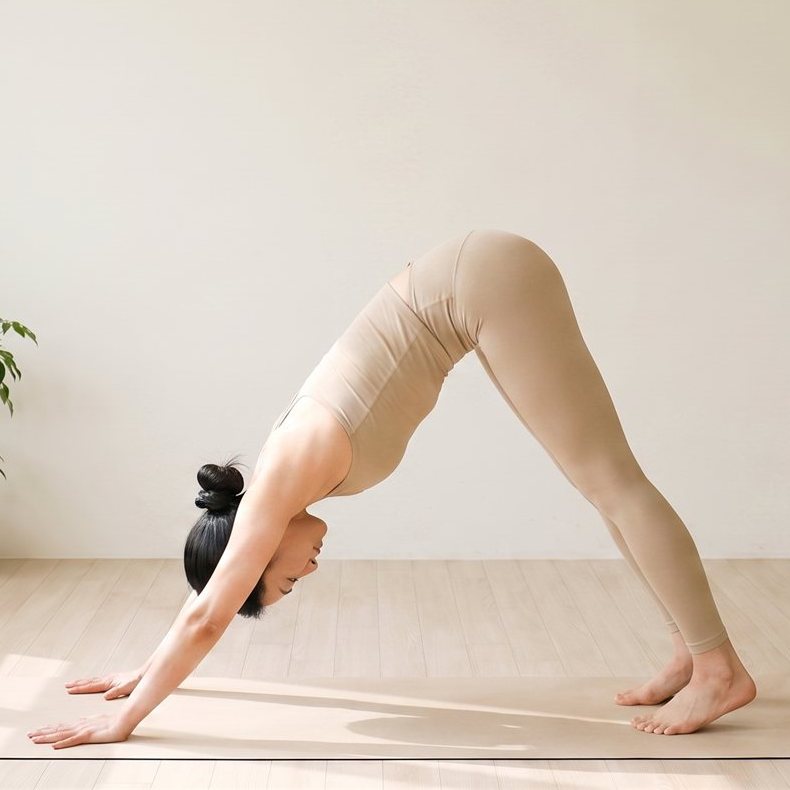
Downward Dog - five slow breaths, the heart of the sequence.
A one-week experiment
If you are new, try this: every morning for seven days, do just three rounds of Surya Namaskara A — nothing else. Three rounds take about four minutes. By day seven the sequence will live in your body rather than your head, and you will understand why practitioners fifty years into the practice still begin every single day with it.
The sun salutation is a conversation between breath and movement. Learn to listen, and the rest of Ashtanga is simply a longer conversation.


