Equal Standing (Samasthiti): The Hardest Pose in the Practice
Every practice begins and ends here, and almost nobody sees it. Students walk to the top of the mat, put their feet together, and are already thinking about the first inhale. Samasthiti lasts about one second for them. In my own practice it is the pose I return to most often when something has gone wrong — when the shoulders have crept up, when the breath has turned shallow, when I have started doing yoga instead of practicing it.
Sama means equal, sthiti means standing or steadiness. Equal standing. It sounds like nothing. It is the whole practice compressed into one shape.
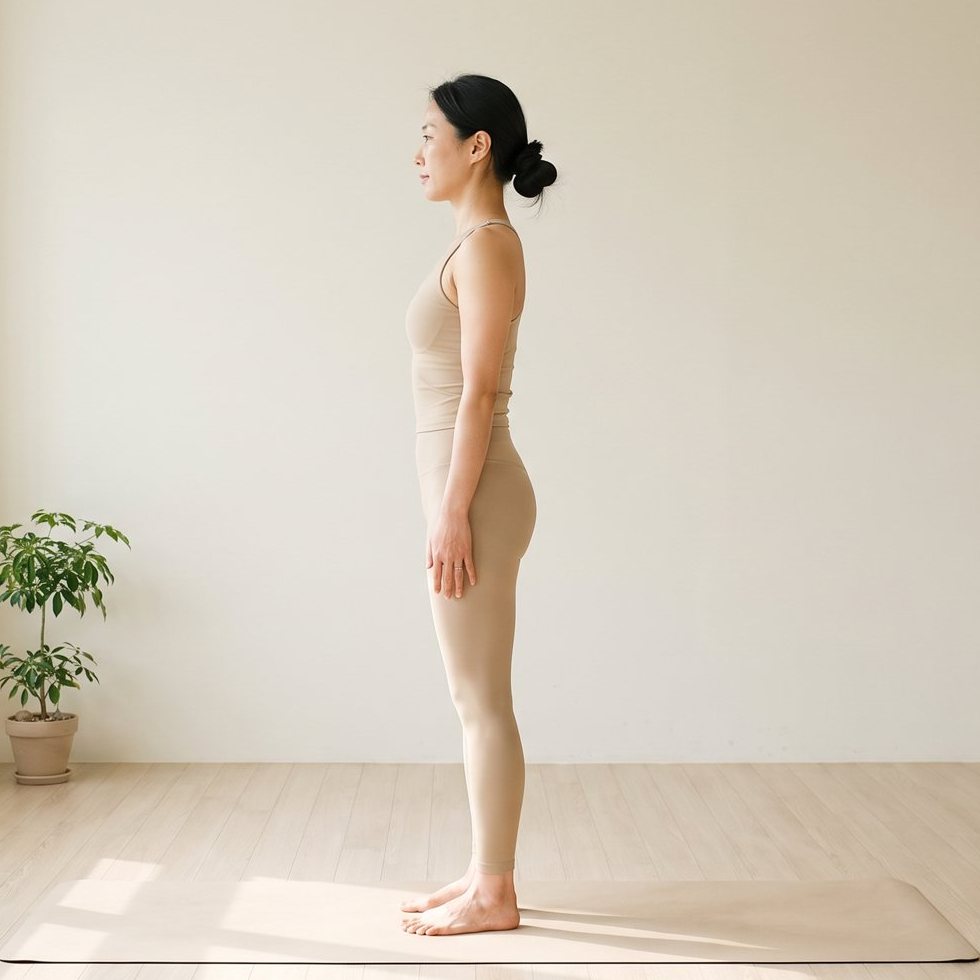
Samasthiti — equal standing, at the top of the mat.
What Samasthiti Actually Asks
Big toes touching, heels very slightly apart. Weight spread across four points of each foot: the base of the big toe, the base of the little toe, and both sides of the heel. Most people stand with the weight sunk into the outer heels; you will feel this the moment you look for it.
From there the work moves upward. Lift the arches without rolling to the outer edges. Draw the kneecaps up by engaging the thighs, but do not push the knees backward. Let the tailbone drop toward the floor so the lower back lengthens — a long spine, not a flattened one. Draw the lower belly in and up: this is mula bandha and uddiyana bandha, the inner locks, and samasthiti is the easiest place in the entire practice to find them because nothing else is distracting you. Ribs stay down, shoulders roll back and drop, arms hang alongside the body with palms facing the thighs. The crown of the head lifts as if a thread were pulling it. Drishti is nasagrai, the tip of the nose.
Read that list again and notice how many separate actions it contains. This is why I call it the hardest pose. In a deep backbend the intensity tells you where you are. In samasthiti nothing tells you anything — you have to know.
The Breath in Standing Still
In the vinyasa count, samasthiti carries no number. It is the zero, the silence before ekam. But it is not breathless. Ujjayi should already be running: the soft ocean sound at the back of the throat, inhale and exhale of roughly equal length, both through the nose.
Before the first Surya Namaskara I ask students to stand and take five full ujjayi breaths, four to five seconds in, four to five seconds out. Listen to the sound. If it is ragged at the start, it will be worse by the third vinyasa. Then, on the count of ekam, the arms sweep up on the inhale into urdhva hastasana — the breath begins the movement, not the other way around. Between Surya Namaskaras you return here and take one to two quiet breaths, no more. At the end of the practice, samasthiti again, before the closing sequence.
Samasthiti Sitting Down
Dandasana, the staff pose, is the same instruction with the legs out in front. Same lifted spine, same shoulders back, same bandhas, same steady breath — only gravity has changed direction.
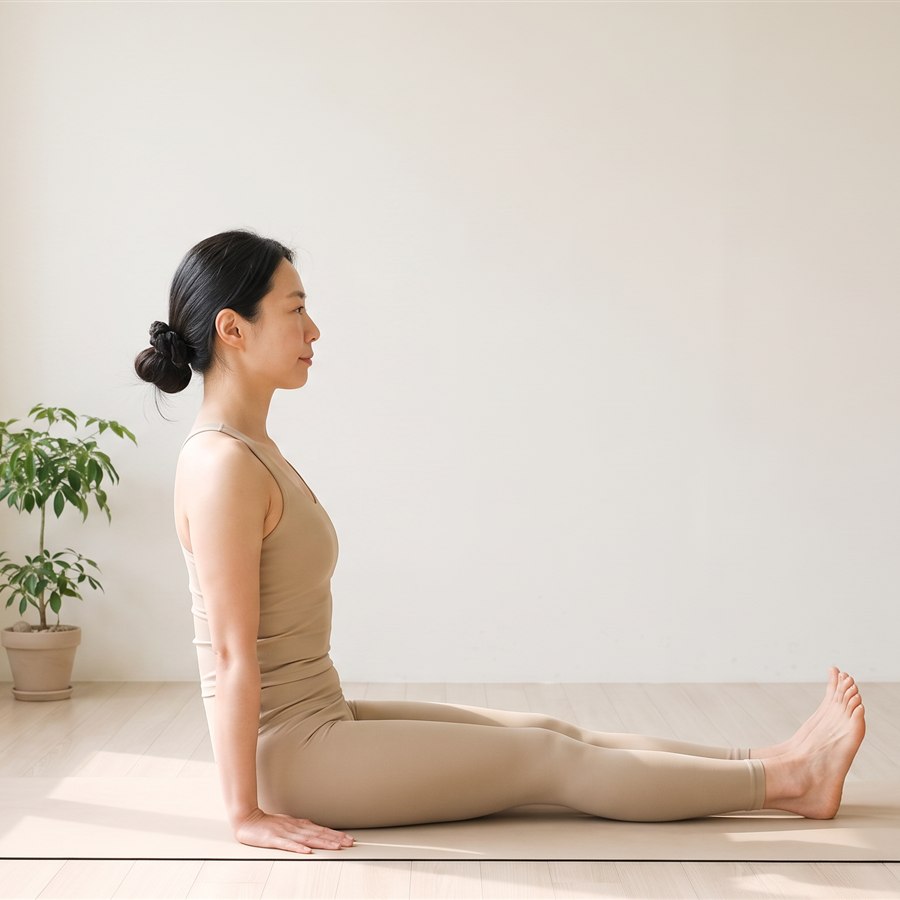
Dandasana — samasthiti, seated.
If you can find your alignment standing, you will find it sitting, and the seated forward folds of the Primary Series will stop being a fight with your hamstrings.
Watch out
- Locked knees. If your knees hyperextend backward, you are hanging on the joint instead of standing on the muscle. Micro-bend and lift the thigh.
- Tucking hard. Dropping the tailbone is a lengthening, not a clenching. If the buttocks grip and the front of the hips shorten, you have gone too far.
- Lifting the chest by arching. The lift comes from the crown of the head, not from throwing the ribs forward. If the lower back pinches, soften the front ribs down.
- Gripping the toes. Curled, clawing toes mean the balance is coming from the feet rather than the whole body. Spread them and let them rest.
- Light-headedness. Standing still with a long breath can make people dizzy at first. If it happens, stop shaping and simply breathe normally until it passes.
If your balance is unsteady or your lower back complains, separate the feet to hip width. Nothing is lost. I have watched a student stand with feet apart for months and then quietly bring them together one morning without mentioning it, because the body was finally ready.
Tomorrow, before your first sun salutation, give this pose thirty seconds instead of one. You will find at least three things you did not know you were doing.
Steadiness is not the absence of movement. It is what remains when the unnecessary movement stops.
🧘 Want to practice these poses right now? Open our interactive guide with photos, alignment details and a breath timer: Ashtanga Shala Practice Guide.
This post is general guidance, not medical advice. If you have an injury or health condition, check with a professional before practicing.


