Reading This Blog: How the Daily Pose Series Works
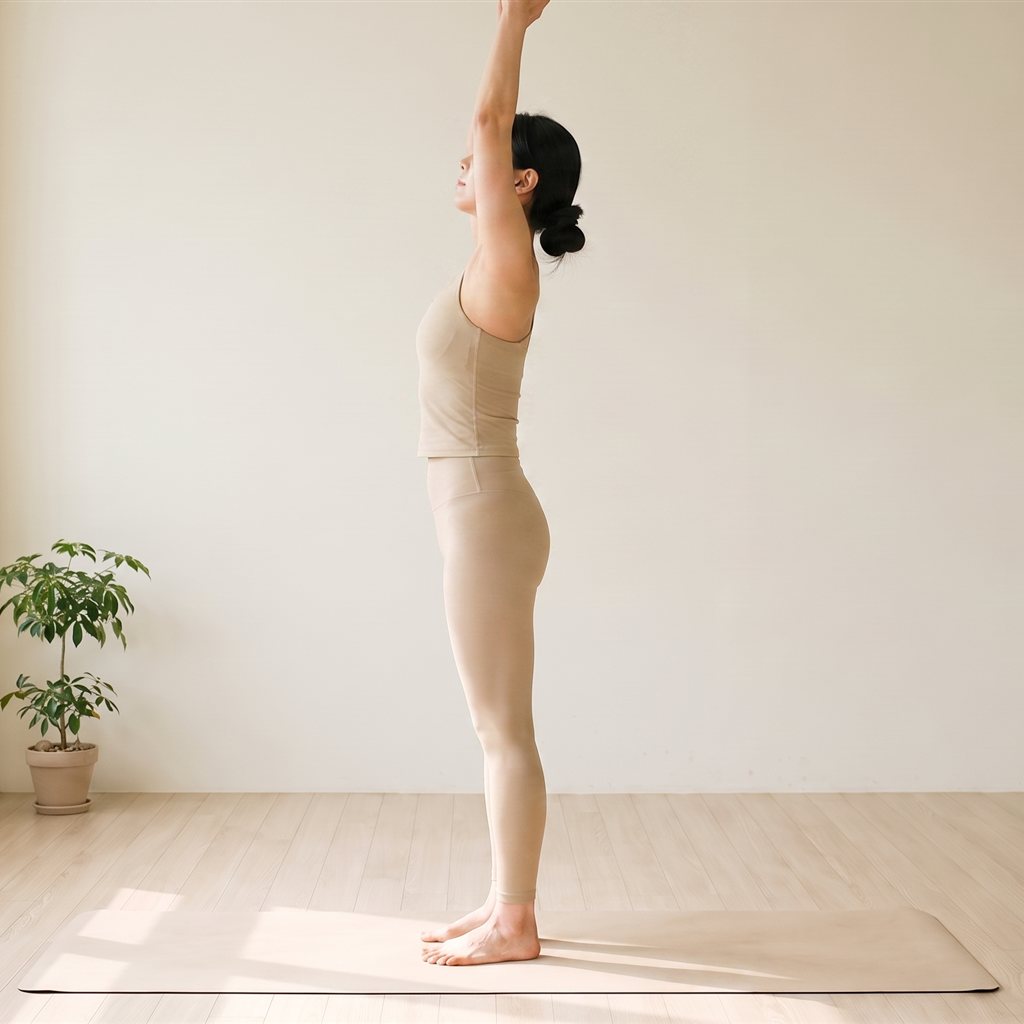
Urdhva Hastasana - the first movement of the first sequence
This is the last post before we begin moving. Everything so far has been the frame — breath, bandhas, gaze, the counted method, and a plan for practicing at home. From here the blog changes character: one pose at a time, in the exact order of the Ashtanga Primary Series, day after day. Today explains how that works and how to get the most out of it.
How the series is built
The posts follow the Primary Series in its traditional order, and they build on each other deliberately:
- Posts 1–8: the foundations. The ones you have just read. They cover the things every pose assumes you already know.
- Posts 9–10: the sun salutations. Surya Namaskara A and B — the sequences you repeat at the start of every single practice, forever.
- The standing sequence. Beginning with the first standing forward fold and running through the standing poses to the warriors.
- The seated sequence. The long middle of the Primary Series, from Dandasana through the forward folds, twists, and arm balances.
- Backbends and the finishing sequence. The closing poses, the inversions, and the final rest.
- Evergreen posts. Once the sequence is complete: practice plans, printable sheets, troubleshooting for tight hamstrings and sore wrists, and honest answers about progress.
Because the order is fixed, later posts assume earlier ones. A post on a seated twist will tell you to keep the breath even and the gaze steady without re-explaining what that means. If a cue ever sounds like shorthand, it is — and the post it came from is linked.
What each pose post contains
Every pose post follows the same structure, so you always know where to find what you need:
- What the pose is — the meaning of the Sanskrit name and what the posture does.
- Step by step — how to get in, one action per step, with the breath for each.
- Breath and gaze — the breathing pattern and the correct drishti for that posture.
- Common mistakes — what beginners actually do wrong, and the fix for each.
- Beginner modifications — honest adaptations for tight hamstrings, stiff shoulders, and real bodies.
- When to be careful — contraindications in plain language.
Pose posts also carry several illustrations placed where they teach — the finished pose at the top, and further images beside the step, the common mistake, or the modification they show. They are there to be looked at while you are on the mat, not admired in advance.
How to follow along safely
Reading a pose and practicing a pose are different activities, and the gap between them is where beginners get hurt. A few rules that make following along at home genuinely safe:
Read the whole post before you try it. Especially the "when to be careful" section. Discovering a contraindication halfway into a posture is too late.
Let the breath be your limit. This is the single most useful rule in the whole practice. If your Ujjayi breath goes quiet, short, or ragged, you have gone further than your body is ready for today. Back off until the sound comes back. This limit is more reliable than how a stretch feels, because sensation lies and breath does not.
Take the modification first, not last. Beginners tend to attempt the full pose, struggle, and only then consider the easier version. Reverse it. Start with the modification, stay there for weeks, and let the full expression arrive on its own.
Never practice through joint pain. Muscle effort and stretch are fine. Sharp or pinching sensation in a knee, shoulder, lower back, or wrist means stop — not push gently, not breathe through it. Stop.
Do not skip ahead to the impressive poses. The sequence warms the body in a specific order for a reason. The arm balance in the middle of the seated sequence is safe partly because of the forty minutes of practice that come before it.
If you are joining in the middle
Plenty of readers arrive at a pose post from a search engine, months into the series. That is fine — each pose post stands alone. But if you intend to actually build a practice rather than look up a single posture, start at post one and read forward. There is a "Start Here" list in the sidebar for exactly this.
You do not have to read at the same pace the posts are published. Many readers work through several foundations posts in an evening, then slow down to one pose every few days once the practicing begins. The blog will wait.
How to actually use this day to day
A rhythm that works well for most home practitioners:
- Read the day's post the evening before, or over coffee.
- Practice what you already know, adding the new pose at its correct place in the sequence.
- Keep the post open on a phone beside the mat for the first few days of a new pose, then stop looking at it.
- Revisit older posts when something stops making sense — that usually means an earlier layer needs another look.
The goal is not to read a yoga blog every day for a year. It is to end up with a practice you can do without reading anything at all.
One honest caveat
Written instruction cannot see you. A teacher in the room notices a rounded lower back or a collapsed shoulder in a second; a blog post cannot. This series is written to be as careful and specific as text allows, and thousands of people learn Ashtanga this way — but if you ever have the chance to practice with a qualified teacher, even a handful of times, take it. What you learn in those sessions will make everything written here land differently.
🧘 If you would rather see the whole sequence laid out at once while you read along, our companion guide has every pose with photos, alignment details and a breath timer: Ashtanga Shala Practice Guide.
That is the frame complete. The poses themselves begin with the sun salutations — Surya Namaskara A and then Surya Namaskara B — the two sequences you will repeat at the start of every practice for the rest of your life. Go and stand at the top of your mat.
This post is general guidance, not medical advice. If you have an injury or health condition, check with a professional before practicing.


