Hand-Under-Foot Pose (Padahastasana): The Second Fold, and Why It Asks More Than the First
Last time we stayed with Padangusthasana, the first standing fold, where you catch the big toes. Today its twin, Padahastasana — pada (foot), hasta (hand): hand-under-foot pose. In the counted practice these two are really one long conversation with the back of your legs, and you do not stand all the way up in the middle of it. You come up only to the head-up position, slide the hands under the feet, and fold again.
Most students meet the second fold expecting it to be easier. It is the same shape, after all, only three inches lower. It rarely is.
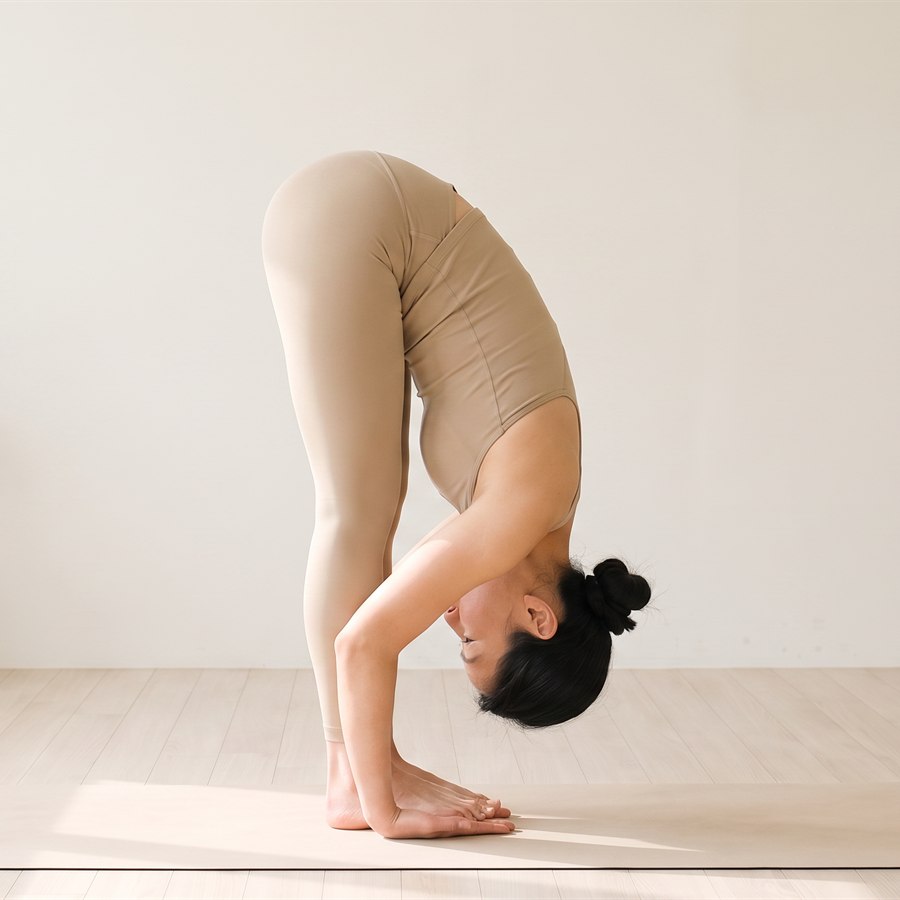
Padahastasana — the palms face up beneath the soles, toes at the wrist creases.
How to enter it, breath by breath
From the fold of Padangusthasana, inhale and come to the head-up position: arms straight, chest forward, the front of the body long, gaze ahead. Exhale and release the toes; slide each hand under the corresponding foot, palm turned up, so the toes come to rest at the wrist creases. Then exhale deeper into the fold — crown of the head down, elbows bending out and back, not squeezing in.
Stay five breaths. The drishti is nasagrai, the tip of the nose, the same gaze you used in the first fold. Uddiyana bandha stays lightly drawn, mula bandha stays held, and the ujjayi sound should stay even and unhurried — if it thins out or catches, you have gone deeper than the pose is offering today. Then inhale to head-up, exhale release the hands, and inhale all the way up to Samasthiti with a flat back and a soft neck.
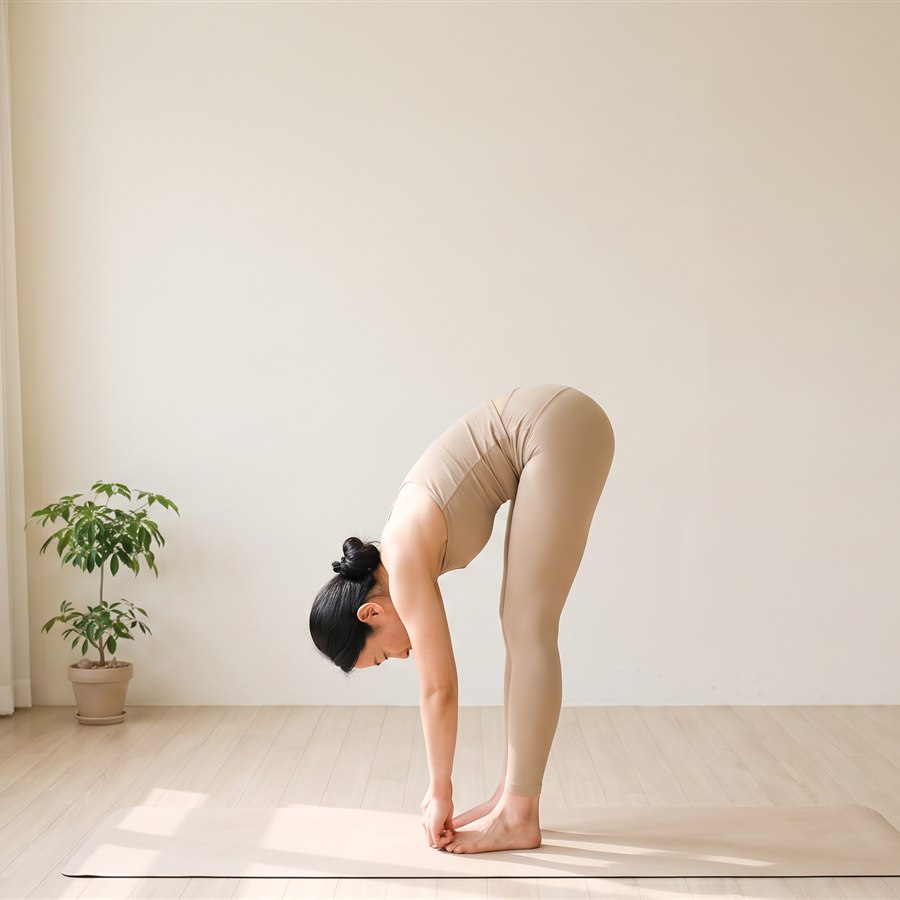
Padangusthasana, the first of the pair. You pass through head-up between the two, never fully upright.
Why the second fold is harder
Three things change, and none of them are about flexibility.
- Your weight moves forward. Standing on your own palms pushes the body weight toward the balls of the feet. This is the real instruction hidden in the pose: the heels stay down, but they stop being where you live. Many students discover here that they have been hanging back into their heels through the whole standing sequence.
- The ankles have to give. Getting the toes to the wrist creases asks the ankle to bend more than the first fold did. Stiff ankles tip the whole structure backward, and then the hamstrings get blamed for something they did not do.
- The lever is longer. Holding the toes lets you pull. Standing on the hands does not. The fold has to come from the hip crease and from the exhale, not from the arms.
I have watched a student work at this pair for two years, coming down maybe a finger's width in that whole time, and then one ordinary Tuesday morning her forehead simply arrived at her shins. Nothing had been forced. Her ankles had quietly stopped resisting.
Watch out
The place to be careful is the top of the hamstring, right where it attaches at the sitting bone. This is the classic Ashtanga injury, and it is slow, quiet, and stubborn. A broad stretch down the belly of the muscle is fine. A sharp, thin, pinching line at the sit bone is not — come out, bend the knees, and treat that leg gently for the rest of the week. I learned this the hard way in my early years, when I believed a fold should always go further than the day before. It cost me the better part of a year.
Other things to keep an eye on:
- Bend the knees without apology. A long spine with bent knees is the pose. A rounded low back with straight legs is not. If the belly can rest on the thighs, the hamstrings will release far sooner.
- Do not crank the wrists. If the hands will not slide under, take only the fingers under the toes, or stay in the first fold for another season. There is no prize for the full hand.
- Keep the neck soft. Let the head hang. Craning to look at your shins tightens exactly what you are trying to release.
- Come up slowly. If you feel light-headed standing, rise on the inhale over the length of the whole breath and take one extra breath in Samasthiti before moving on.
Do not chase depth here. This pair sits at the very beginning of the standing sequence, before the body is warm in the way Trikonasana will make it warm. Whatever you take from your legs at this point in the practice, you will not have later.
The floor is not going anywhere. Let the breath decide how far down you go today.
🧘 Want to practice this pose right now? Open our interactive guide with photos, alignment details and a breath timer: Ashtanga Shala Practice Guide.
This post is general guidance, not medical advice. If you have an injury or health condition, check with a professional before practicing.


